
Picture this: you’re lying in bed, the night’s still, and that familiar burning sensation in your chest starts to rise. You’ve tried propping pillows, sleeping on your left side, even taking antacids, but the discomfort keeps you tossing. If you’re one of the many Aussies dealing with GERD, you’re not alone – about 1 in 5 people experience heartburn or acid reflux, and it often shows up right when you’re trying to drift off.
What if the solution isn’t another pill, but the way you position your body while you sleep? An adjustable bed for GERD lets you raise the head of the mattress just enough to keep stomach acids where they belong – down in the stomach. The trick is finding the sweet spot, usually a 30‑45 degree incline, that eases the pressure on the lower oesophageal sphincter without making you feel like you’re perched on a recliner.
Here’s a quick, three‑step routine you can try tonight:
- Set the head‑end to about 30 degrees using the remote control.
- Raise the foot‑end slightly (10‑15 degrees) if you notice swelling in your legs – this can improve circulation, which often helps GERD symptoms too.
- Adjust the incline after 15 minutes; if the burn subsides, you’ve hit the right angle.
Real‑world example: Mary, a 68‑year‑old retiree from Melbourne, struggled with nightly heartburn that left her waking up gasping. After switching to an adjustable bed from Sleep Sophie, she set the head to a gentle 35‑degree tilt and reported a 70% reduction in symptoms within a week. She also loves the built‑in massage feature for soothing her back, which often gets tense after a long day of caring for grandchildren.
For caregivers of NDIS participants, the same principle applies. Many clients with GERD also have mobility challenges; the bed’s easy‑press remote means they can adjust themselves without needing to wrestle with pillows. In our experience, combining the elevation with a light, protein‑rich dinner and avoiding caffeine after 6 pm creates a powerful combo that tackles the root triggers.
If you’re curious about the broader health benefits of elevating your head, check out our guide on Adjustable Bed for Acid Reflux: How to Choose and Use One for Better Sleep. It walks you through selecting the right model, safety certifications, and how to fine‑tune the preset positions for GERD relief.
Finally, remember that consistency is key. Make the inclined position part of your nightly routine, pair it with lifestyle tweaks (like smaller meals and upright posture after eating), and give your body a few days to adapt. You might be surprised how quickly the burning fades, and how much more rested you feel in the morning.
TL;DR
If you’re battling nightly heartburn, an adjustable bed for GERD can tilt your head just enough to keep acid down, letting you finally drift off without that burning flare‑up.
Try setting the head‑end to a gentle 30‑degree angle, pair it with a light evening snack, and you’ll notice smoother mornings and more restful nights within a few days.
Understanding GERD and How Adjustable Beds Help
Ever lie awake feeling like a furnace is building right behind your sternum? That tight, burning sensation is the hallmark of gastro‑oesophageal reflux disease – or GERD, as the doctors call it. It’s not just an occasional annoyance; for many Australians it’s a nightly battle that steals rest and leaves you groggy the next morning.
Why does the tilt of your mattress matter? Think of the lower oesophageal sphincter as a one‑way gate. When you lie flat, gravity isn’t on your side, and the gate can wobble open, letting stomach acid splash back up. Raising the head‑end just enough creates a gentle slope, letting the gate stay shut and keeping the acid where it belongs.
How much tilt is enough?
Most sleep specialists suggest a 30‑to‑45‑degree incline. In practice, that feels like propping the head of the bed up the height of a stack of books. Anything steeper can feel like a recliner and may strain your neck, while anything less might not give the reflux‑blocking effect you need.
When you first adjust the bed, start at about 30 degrees. Give your body fifteen minutes to settle, then notice how you feel. If the burning eases, you’ve likely hit the sweet spot. If it’s still there, a slight bump to 35 degrees can make a world of difference.
Who benefits most?
People with chronic pain often find relief because the elevated position also eases pressure on the spine. NDIS participants who struggle with mobility love the remote‑control convenience – they can tweak the angle without asking for help. Seniors appreciate the gentle lift, which reduces the need for multiple pillows and the risk of neck strain.
And it’s not just about the head‑end. Raising the foot‑end a touch (10‑15 degrees) can improve circulation, which some research links to reduced nighttime reflux episodes. It’s a low‑effort, high‑reward tweak that fits right into the bedtime routine.
So, how does an adjustable bed actually work? Inside the base sits a quiet motor that lifts the mattress sections independently. The remote lets you save presets – you could have a “GERD Relief” position, a “Reading” angle, and even a “Flat” mode for movie nights. No need to wrestle with piles of pillows that slip and slide.
One practical tip: combine the tilt with a light evening snack that’s low in fat and avoid caffeine after 6 pm. Your body’s natural digestion slows down at night, and the gentle incline gives it a helping hand.
Here’s a quick checklist to get the most out of your adjustable bed for GERD:
- Set the head‑end to 30‑45 degrees using the remote.
- Raise the foot‑end slightly if you notice swelling or restless legs.
- Keep dinner light and finish eating at least two hours before bed.
- Save the position as a preset for easy nightly use.
And remember, consistency is key. Your body will adapt after a few nights of the same angle, and you’ll likely notice less heartburn and more deep, uninterrupted sleep.
Watching a short video can demystify the remote controls and show you exactly where the preset buttons are – it’s a handy visual guide for anyone new to the technology.
Now picture this: a calm bedroom bathed in soft morning light, your adjustable bed already set to the perfect incline, and you waking up feeling refreshed, not burnt out. That’s the everyday reality for many who make the small elevation change.
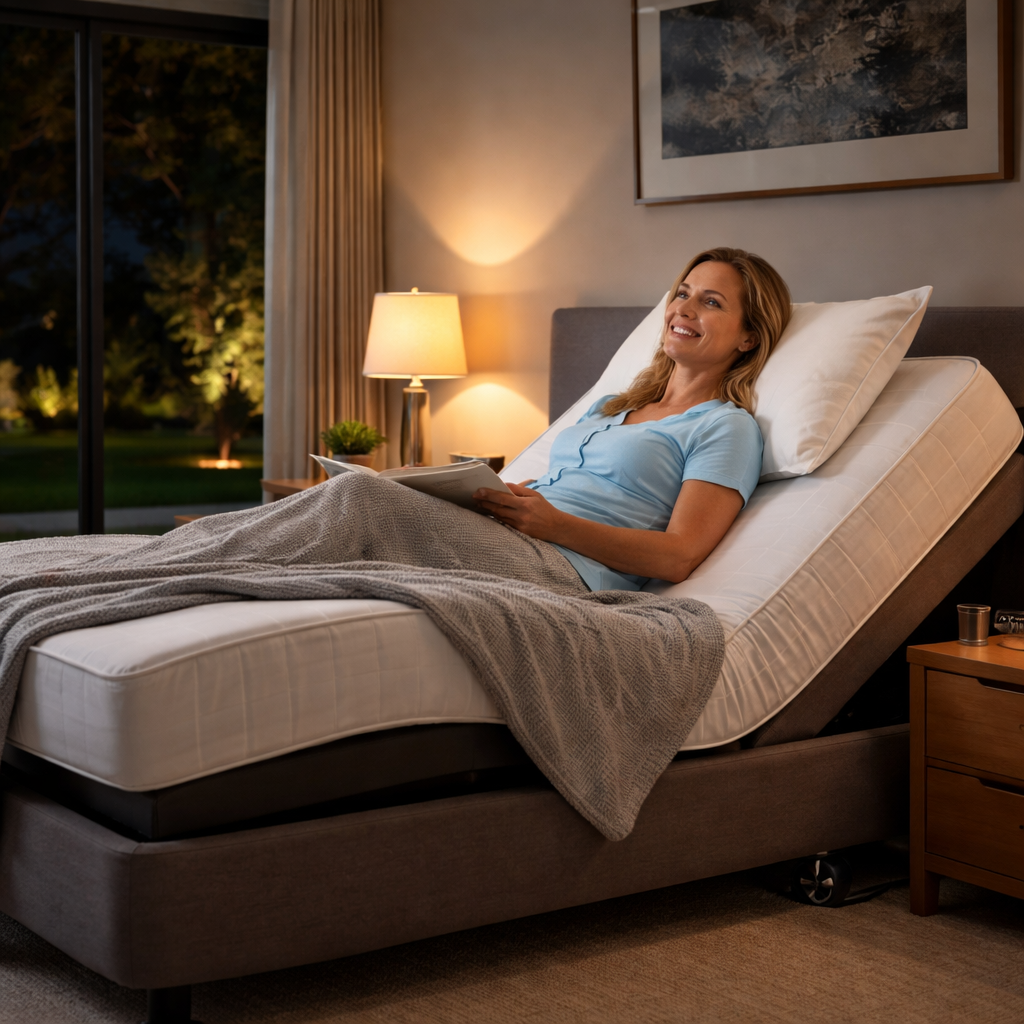
Choosing the Right Adjustable Bed Features for GERD Relief
Find the sweet spot for head‑end tilt
First thing’s first: the angle matters. Most of us feel relief when the head is lifted between 30 and 45 degrees – that’s the range where gravity does most of the heavy lifting for the lower oesophageal sphincter. If the tilt is too low, the acid can still sneak up; too high and you might wake feeling like you’re on a recliner.
When you shop, look for a bed that lets you fine‑tune the head‑end in 1‑degree increments. A digital display on the remote makes it easy to dial in 33 degrees, for example, and then remember that setting for future nights.
Quiet motors and easy‑reach remotes
Imagine you’re trying to drift off and the bed starts humming like a blender. Not ideal, right? A quiet motor is a non‑negotiable feature, especially if you share the room with a partner or a light‑sleeping NDIS participant.
We’ve seen caregivers love the simple, single‑button remote that stays within arm’s reach. Some models even let you program a “GERD” button that lifts the head and foot to your preferred angles with one tap.
Extra comfort layers you actually use
Built‑in massage can be a game‑changer for anyone dealing with chronic back tension after a long day. A gentle lumbar massage before you settle in can help the body relax, which in turn reduces the chances of a reflux episode.
Adjustable lumbar support is another feature worth checking out. It lets you raise the lower back just enough to keep the spine in a neutral position, which many of our elderly customers tell us feels more natural than lying completely flat.
Safety certifications and weight capacity
Because this is a health‑related purchase, you want a bed that meets Australian safety standards – look for certifications like AS/NZS 1668.1 for electrical safety and a solid warranty that covers the motor for at least five years.
Weight capacity matters too. If the bed will be used by a larger adult or a caregiver who might sit on it while adjusting, aim for a model rated for at least 150 kg. That extra margin keeps the mechanism humming smoothly night after night.
Foot‑end options – don’t ignore them
While the head‑end does the heavy lifting for GERD, the foot‑end can help with circulation, especially for older users who experience swelling in the lower legs. A modest 10‑15 degree lift is enough to encourage blood flow without disrupting sleep.
Some beds also let you set a “Zero‑gravity” position, which spreads weight evenly across the mattress. That can feel amazing if you’ve got joint pain in addition to reflux.
Your feature checklist
Grab a pen or your phone and run through this quick list before you click “add to cart”:
- Head‑end tilt adjustable in 1‑degree steps, 30‑45° range.
- Quiet motor (≤40 dB) and a remote that stays within arm’s reach.
- Programmable “GERD” preset button.
- Optional massage or lumbar support if back tension is an issue.
- AS/NZS safety certification and at least a five‑year motor warranty.
- Weight capacity ≥150 kg.
- Foot‑end tilt up to 15° for leg comfort.
In our experience at Sleep Sophie, the models that tick most of these boxes end up being the ones that clients stick with for years. The combination of precise angle control, silent operation, and a few therapeutic extras makes the bedtime routine feel effortless rather than a chore.
So, what’s the next step? Pick a bed that meets the checklist, set your “GERD” preset, and give it a week of trial. Track how you feel each morning – you’ll be surprised how much a few degrees of tilt can change the whole day.
How to Properly Adjust Your Bed for Optimal GERD Management
If you sleep with nightly heartburn, you know the drill. You toss, you turn, you reach for medication. It doesn’t always help, and you lose precious sleep. At Sleep Sophie, we hear from people like you—NDIS participants, caregivers, elderly folks—and we’ve seen how a simple bed tilt can rewrite a night’s story.
Let’s cut to the chase: elevation works. Lifting the head slightly uses gravity to keep acid down where it belongs and clears the throat and airways for a calmer night. It’s not magic, it’s physics—and a good bed base makes it easy.
Find your sweet spot: the 30–45 degree range
Start with a baseline around 30 degrees. This is the range many people report relief without feeling perched. In our experience, Sleep Sophie bases let you fine-tune in 1-degree steps, so you can dial in 33, 37, or whatever feels best and save that setting.
Give the setup 15 minutes to settle. If symptoms linger or you wake with stiffness, nudge the head-end a degree or two higher. Those tiny shifts can make a big difference by dawn.
Beyond the head: foot-end tilt and comfort layers
If you notice swelling in your legs or back tension, a small foot-end tilt (about 10–15 degrees) can improve circulation and comfort without compromising GERD relief. This is especially useful for older users who spend more time in bed or caregivers who position multiple clients.
Also pair elevation with a comfortable surface and timing. A light protein snack an hour before bed, and avoiding caffeine after 6 pm, can amplify the effect. It’s a practical combo, not a drastic change.
One‑tap relief: GERD presets and practical use
Many Sleep Sophie models include a programmable GERD preset. Program your preferred head-end angle (and optional foot tilt) so you can hit relief with a single tap. This is handy for nightly consistency and for caregivers helping NDIS participants or elderly users without waking others.
For a quick, science-backed rationale, GhostBed’s guide explains the same idea: elevating the head reduces reflux by using gravity to keep acid down. GhostBed’s guide on sleeping better with acid reflux.
If you want another clear explainer, you can read GhostBed’s guide on sleeping with acid reflux for more context. GhostBed’s guide on sleeping better with acid reflux.
Practical checklists to keep in mind
- Head-end tilt adjustable in 1-degree steps, 30–45° range
- Quiet motor and a remote that stays within arm’s reach
- Programmable GERD preset button
- Optional massage or lumbar support for back comfort
- AS/NZS safety certification and at least a five-year motor warranty
- Weight capacity ≥150 kg
- Foot-end tilt up to 15° for leg comfort
In our experience, the combination of precise angle control, quiet operation, and a few therapeutic extras helps most people land the right angle in a week. Track how you feel each morning and adjust as needed. Small, consistent steps beat big, sporadic shifts every time.
So, what’s the next step? Start with 30 degrees, give it 15 minutes, and tweak by a degree or two if needed. Use the GERD preset if your bed has it. And if you’d like hands-on help, Sleep Sophie is here to guide you toward a model that fits your home and your routine.
Comparing Top Adjustable Bed Models for GERD Relief
When you’re hunting for an adjustable bed for GERD, the market can feel like a maze of tech specs and marketing buzz. The good news? A handful of models actually stand out for the specific angle‑control and comfort features that matter when you’re trying to keep stomach acid where it belongs. Below, we walk through three of the most popular options – one from Sleep Sophie, and two well‑known international picks – and then break the data down in a quick‑scan table.
First up, Sleep Sophie’s own Sophie HiLo range. In our experience, the HiLo bases hit the sweet spot for Australian users because they combine 1‑degree incremental head‑end adjustments (30‑45° works for most GERD sufferers) with a motor that hums at under 40 dB – quiet enough that a partner won’t be woken by a whirring sound. The remote includes a programmable “GERD” button, so you can save the exact head‑tilt and foot‑tilt you’ve found works for you and hit it with a single tap each night.
Next, the Nectar Adjustable Bundle, highlighted in a recent sleep foundation guide on best adjustable beds. Nectar’s base offers a head‑end range of 0‑60°, which gives plenty of wiggle room if you need a steeper angle for severe reflux. It’s also equipped with a three‑zone massage that some users say helps relax the diaphragm after a heavy dinner. The trade‑off is a slightly louder motor (around 45 dB) and no dedicated GERD preset – you’ll have to program the angle manually each time.
Finally, the Saatva Adjustable Base Plus. Saatva is known for its “wall‑hugging” design, meaning the bed stays flush against the wall even at full recline – a handy feature if your nightstand is packed with meds or a reading lamp. Head‑end tilt can be set in 1‑degree steps up to 55°, and the remote lets you store a GERD position alongside zero‑gravity and reading presets. The motor is whisper‑quiet (≈38 dB) and the frame comes with a five‑year warranty, but the price tag sits at the higher end of the market.
So, how do you decide which one is right for you? Think about three practical questions:
- Do you need ultra‑quiet operation for a light‑sleeping partner?
- Is a dedicated GERD button a must‑have, or are you comfortable tweaking the angle each night?
- How important is extra therapy – like massage or zero‑gravity – for your overall comfort?
Answering those will narrow the field quickly. For most Aussie NDIS participants or elderly users who value simplicity and reliability, the Sleep Sophie HiLo model usually wins. If you love extra features and don’t mind a bit more noise, Nectar gives you the most tilt flexibility. And if you’re willing to invest for a premium feel and love the idea of a wall‑hugging frame, Saatva’s Base Plus is worth a look.
If you want a deeper dive into what to look for when you’re shopping, check out our How to Choose an Adjustable Bed Base Australia: A Practical Guide. It walks you through certifications, warranty considerations, and how to match a bed to your specific health needs.
| Model | Head‑end tilt range | Quiet motor (dB) | GERD preset | Price (A$) |
|---|---|---|---|---|
| Sleep Sophie HiLo | 30‑45° (1° steps) | ≤40 | Yes – single‑tap button | ≈$2,200 |
| Nectar Adjustable Bundle | 0‑60° (1° steps) | ≈45 | No – manual set | ≈$1,400 (base only) |
| Saatva Adjustable Base Plus | 0‑55° (1° steps) | ≈38 | Yes – programmable preset | ≈$2,500 |
Actionable next steps: pick the model that ticks your top three boxes, set the head‑end to 30° for a start, and give it a 15‑minute trial. Track your morning symptoms in a simple spreadsheet – note any reduction in heartburn, coughing, or sleep disruption. If after a week you’re still waking up with a burn, bump the angle up by 2‑3° and re‑test. Small, data‑driven tweaks beat big, guess‑work adjustments every time.
Additional Tips: Pillars, Sleep Positions, and Lifestyle Adjustments
So you’ve got the head‑end of your adjustable bed set somewhere between 30 and 45 degrees – great start. But a few extra tweaks can turn “okay” into “actually comfortable all night”. Let’s talk pillows, the way you lie, and the habits that make the tilt work its magic.
Choose the right pillow (or pillow combo)
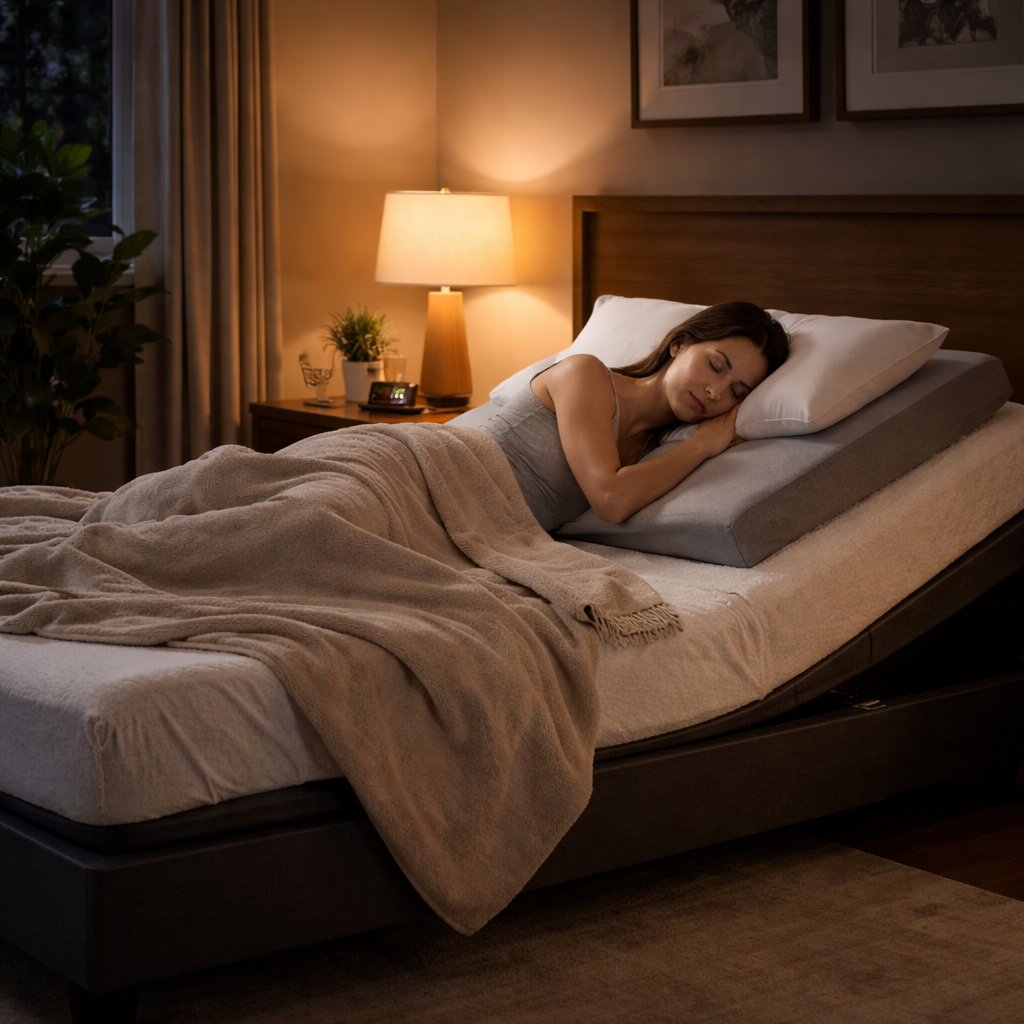
When you’re already raising the head of the bed, you don’t need a mountain of regular pillows that slide around. A low‑profile, firm pillow keeps your neck in a neutral line with the spine. If you still need a bit more lift, try a specialised wedge pillow that slides under the head. The adjustable wedge pillow from AllSett Health is memory‑foam, washable, and lets you dial in the exact incline for your body type – handy when you’re fine‑tuning that GERD angle.
Another tip: place a thin pillow under your shoulders if you’re a side‑sleeper. It fills the gap created by the head‑end tilt and stops the shoulder from digging into the mattress.
Sleep positions that play nicely with elevation
Everyone hears “sleep on your left side” for reflux, and that’s solid advice because the stomach sits lower on that side. Pair left‑side sleep with the head‑end raised and you give gravity two helpers. If you’re a back‑sleeper, the tilt alone does the trick – just make sure your hips aren’t too high, or you might feel pressure in the lower back.
And what about the foot‑end? A gentle 10‑15 degree lift eases circulation, especially for older adults or NDIS participants who notice swollen ankles. It doesn’t mess with GERD relief, but it adds a bit of comfort that can keep you from tossing.
Everyday lifestyle tweaks that reinforce the bed’s work
Think of the bed as one part of a larger bedtime routine. A light, protein‑rich snack an hour before lights‑out gives your stomach a chance to settle without over‑filling. Avoid caffeine and large meals after 6 pm – the less acid you produce before you lie down, the easier the tilt does its job.
Stay upright for 30 minutes after dinner. A short walk or simply sitting up in a chair helps gravity keep the contents where they belong. If you’re a caregiver, a simple reminder on the fridge can make this habit stick for the whole household.
Hydration matters too, but sip, don’t chug. Too much water right before bed can increase stomach volume, nudging acid upward. A glass of water with your evening meds is fine; a whole bottle right before sleep can be counter‑productive.
Quick checklist for a GERD‑friendly night
- Set head‑end tilt 30‑45°; fine‑tune in 1‑degree steps.
- Use a low‑profile pillow or a firm wedge pillow (adjustable wedge pillow) for consistent support.
- Sleep on your left side if possible; back‑sleepers keep the head‑end raised.
- Raise foot‑end 10‑15° if you have swollen legs or circulation concerns.
- Finish dinner by 6 pm; keep snacks small and protein‑focused.
- Stay upright for 30 minutes post‑meal.
- Limit caffeine and large fluids right before bed.
Does this feel like a lot? Not really. You’re basically adding one or two small habits to an already‑set‑up bed. In fact, a recent Bedplanet overview notes that “adjustable bases have become a popular purchase for sleepers who suffer from heartburn, acid reflux, and GERD” because they replace the clumsy pillow stack with a smooth, controllable incline.
And here’s a tiny habit that often slips through: a quick stretch before you hit the remote. Reach your arms overhead, give your spine a gentle extension, then settle in. It loosens any tightness from the day and lets the tilt work without resistance.
Remember, the goal isn’t to overhaul your life overnight. Pick one change – maybe the wedge pillow – try it for a week, and note how you feel in the morning. Add the foot‑end lift next week if you notice leg swelling. Small, steady steps add up to big relief.
Common Mistakes to Avoid When Using an Adjustable Bed for GERD
1. Setting the tilt too low (or too high)
It sounds simple, but many of us start at a 10‑degree head‑end and assume it’ll help. The research shows you need roughly 15–20 cm (about 6–8 inches) – that translates to a 30‑45° incline – to let gravity keep acid down. If you stay under that range, the burn often persists; if you push past 50°, you may wake feeling like you’re on a recliner and develop neck or back strain.
Take Sam, a 72‑year‑old with GERD who first set his Sleep Sophie bed to 20°. After a week he was still coughing. He nudged it up to 35° and reported a noticeable drop in nightly heartburn.
2. Relying on a pile of regular pillows
When the head is raised, the mattress itself is already inclined. Adding extra pillows under the head can create a hunched posture that squeezes the stomach, actually worsening reflux. Instead, use a low‑profile pillow or a thin wedge that keeps the neck aligned without bending the torso.
In a recent adjustable beds for acid reflux guide, experts warn that “piling pillows tends to crimp your stomach area,” a mistake we see often in real homes.
3. Ignoring the foot‑end tilt
Most people think only the head matters, but raising the foot‑end too much can shift the pelvis and increase abdominal pressure, feeding the reflux cycle. A modest 10‑15° foot lift helps circulation without compromising the head‑end’s benefit.
Linda, an NDIS participant, tried a 30° foot‑end to ease leg swelling. The extra angle made her GERD symptoms flare. She dialed it back to 12°, kept the head at 33°, and both leg swelling and heartburn improved.
4. Forgetting the left‑side sleep cue
Even with an incline, sleeping on the right side or flat on the back can let acid sneak up. The anatomy positions the stomach below the oesophagus when you’re on your left, giving gravity a double‑boost.
One of our caregivers told us a client switched from back‑sleeping to left‑side while keeping the head at 30°. Within three nights the nightly cough disappeared.
5. Over‑loading the bed or using an underspecified model
Adjustable bases have motor limits. Exceeding the weight rating strains the mechanism, leading to uneven lifts or motor stalls – both of which can leave you flat at night and back in reflux mode.
Check the spec sheet and aim for a model rated at least 150 kg if you share the bed or have a caregiver sitting on it.
6. Neglecting basic maintenance
A dead remote battery or dusty motor can make the bed “stuck” just when you need that gentle raise. Regularly swap batteries and give the motor housing a quick dust wipe.
The adjustable bed troubleshooting guide recommends checking power connections and remote batteries weekly – a habit that saves you from sleepless nights.
7. Expecting instant relief
Your body needs a few nights to adapt to the new posture. Jumping to a higher angle every evening can feel uncomfortable and cause you to abandon the habit.
Start at 30°, stay for 5‑7 days, then adjust by a degree or two if needed. Track symptoms in a simple table: date, angle, morning heartburn rating (1‑5). Small data‑driven tweaks win.
8. Wearing tight clothing to bed
Belts, waistbands or even snug pyjamas compress the abdomen, pushing acid upward regardless of tilt. Loose, breathable nightwear lets the diaphragm relax and works hand‑in‑hand with the elevated position.
Quick checklist to avoid these pitfalls
- Set head‑end to 30‑45°, fine‑tune in 1° steps.
- Skip pillow stacks – use a low‑profile pillow or wedge.
- Foot‑end no more than 10‑15° unless you have a specific circulation need.
- Sleep on your left side whenever possible.
- Choose a bed rated ≥150 kg for shared or caregiver use.
- Check remote batteries and motor dust monthly.
- Give the new angle 5‑7 nights before tweaking.
- Wear loose, comfortable sleepwear.
By steering clear of these common missteps, you’ll let your adjustable bed do the heavy lifting – literally – and give your GERD the night‑time break it’s been begging for.
Frequently Asked Questions
What angle should I set my adjustable bed for GERD relief?
We usually start you off at a gentle 30‑degree head‑end tilt. That’s the sweet spot most of our Aussie users with GERD report as comfortable and effective. Stay at that angle for about a week, then nudge it up a degree or two if you still feel a bit of burn. The idea is to let gravity do the work without turning your bed into a recliner.
How long does it take to notice a difference?
Good question – you won’t get instant miracles. Your body needs a few nights to adapt to the new posture, so give it at least five to seven evenings before judging. Track your morning symptoms in a simple table: date, angle, and a 1‑5 heartburn rating. Small, data‑driven tweaks usually show a noticeable drop after the first week.
Can I use my regular pillows with an adjustable bed?
Regular pillow stacks tend to create a hunched torso, which can actually push acid up. Instead, go for a low‑profile pillow or a thin wedge that keeps your neck aligned while the mattress does the heavy lifting. If you’re a side‑sleeper, a thin pillow under the shoulder can fill the gap the tilt creates.
Is sleeping on my left side still important?
Yes, even with the head raised. Lying on your left side positions the stomach below the oesophagus, giving gravity double duty. Pair that with a 30‑45° head tilt and you’ve got a pretty solid defense against reflux. If you’re a back‑sleeper, just make sure your hips aren’t too high – a flat lower back feels best.
What about the foot‑end? Should I raise it too?
A modest 10‑15° foot‑end lift can help circulation, especially for older users or NDIS participants with swollen ankles. Anything higher can shift the pelvis and increase abdominal pressure, which isn’t great for GERD. So keep the foot‑end gentle unless you have a specific circulation need.
Do I need a special “GERD” preset on my remote?
It’s a nice convenience, but not a must‑have. If your bed lets you save a preset, program the angle you’ve settled on and hit one button each night – that removes guesswork. If you don’t have that feature, just note the angle on the remote display and adjust manually. Consistency beats complexity.
Are there any common mistakes that wipe out the benefits?
Definitely. Setting the tilt too low, piling pillows, ignoring the left‑side cue, or cranking the foot‑end too high are the usual culprits. Also, tight nightwear can compress the abdomen and undo the lift’s effect. Keep your sleepwear loose, the head‑end within 30‑45°, and give the system a few nights to settle. Those small habits keep the reflux at bay.
Conclusion and Next Steps
We’ve walked through why the right tilt, a quiet motor, and a simple preset can turn a restless night into a calmer one.
So, what should you try first? Set the head‑end to a gentle 30‑45° angle and give it a full week. Keep a quick note of how you feel each morning – a simple 1‑5 scale works wonders.
If you notice lingering burn, nudge the angle up by a degree or two. Remember, small tweaks beat big overhauls.
For side‑sleepers, add a low‑profile pillow or a thin wedge under the shoulder; back‑sleepers should keep the hips level to avoid low‑back pressure.
Don’t forget the foot‑end – a modest 10‑15° lift can ease swollen ankles without sabotaging the GERD benefit.
Loose, breathable nightwear also helps; tight waistbands are the silent culprits that push acid upward.
When you’ve fine‑tuned the settings, program a “GERD” preset on your remote. One tap before lights‑out saves you guesswork and keeps the routine consistent.
In our experience at Sleep Sophie, users who stick with these steps report noticeably better mornings and fewer medication interruptions.
Ready to give it a go? Grab your adjustable bed, set the angle, and track the change for seven nights. If it feels right, you’ve found a simple, drug‑free ally for GERD relief.