
Let me be honest: if you wake with neck stiffness after a night on an adjustable bed, you’re not alone. Pain can linger when the pillow under you is flat, mismatched, or slides out of place. Here’s the truth: the right pillow can change how you feel when you wake up. So, what exactly makes a pillow the best pillow for an adjustable bed?
Loft matters because your head needs to stay aligned as you tilt and raise. Look for a pillow with adjustable loft or a fill that compacts neatly at different angles. Breathable materials help you stay comfortable all night, because overheating makes you toss and turn.
Position matters as much as pillow choice. If you sleep on your side or back during incline, you want firm support under the neck without pushing your chin forward. A non-slip cover or a simple strap can keep the pillow from sneaking away when you adjust the bed.
In our experience, sleepers who combine the right pillow with their Sleep Sophie base notice steadier alignment and less morning stiffness. The Sophie Pillow, Sleep Sophie’s flagship 3-in-1 option, is designed to adapt to different lofts so you can dial in the exact height you need. For a broader look at top-performing choices, check out The Best Pillows for Adjustable Beds – 2026 Edition.
So, what should you do next? Start by testing a few loft levels, then note how your neck feels in each position. Take notes on how different fabrics feel against your skin, and whether a cool cover makes a difference for you. If you share a bed with a partner, look for a pillow that stays stable when the bed moves. If you’re shopping, Sleep Sophie offers options that align with therapeutic needs and daily comfort. Small changes, big relief. Let’s dive in.
TL;DR
Finding the best pillow for adjustable bed means matching loft, support, and breathability to your sleep position, so you wake pain‑free and refreshed.
Test a few heights, note how your neck feels, and choose a pillow that stays stable when the bed moves – simple today steps for lasting comfort.
Step 1: Assess Your Sleep Position and Support Needs
Ever woken up feeling like your neck did a midnight gymnastics routine? You’re not imagining it – the pillow you’re using probably isn’t speaking the same language as your adjustable bed.
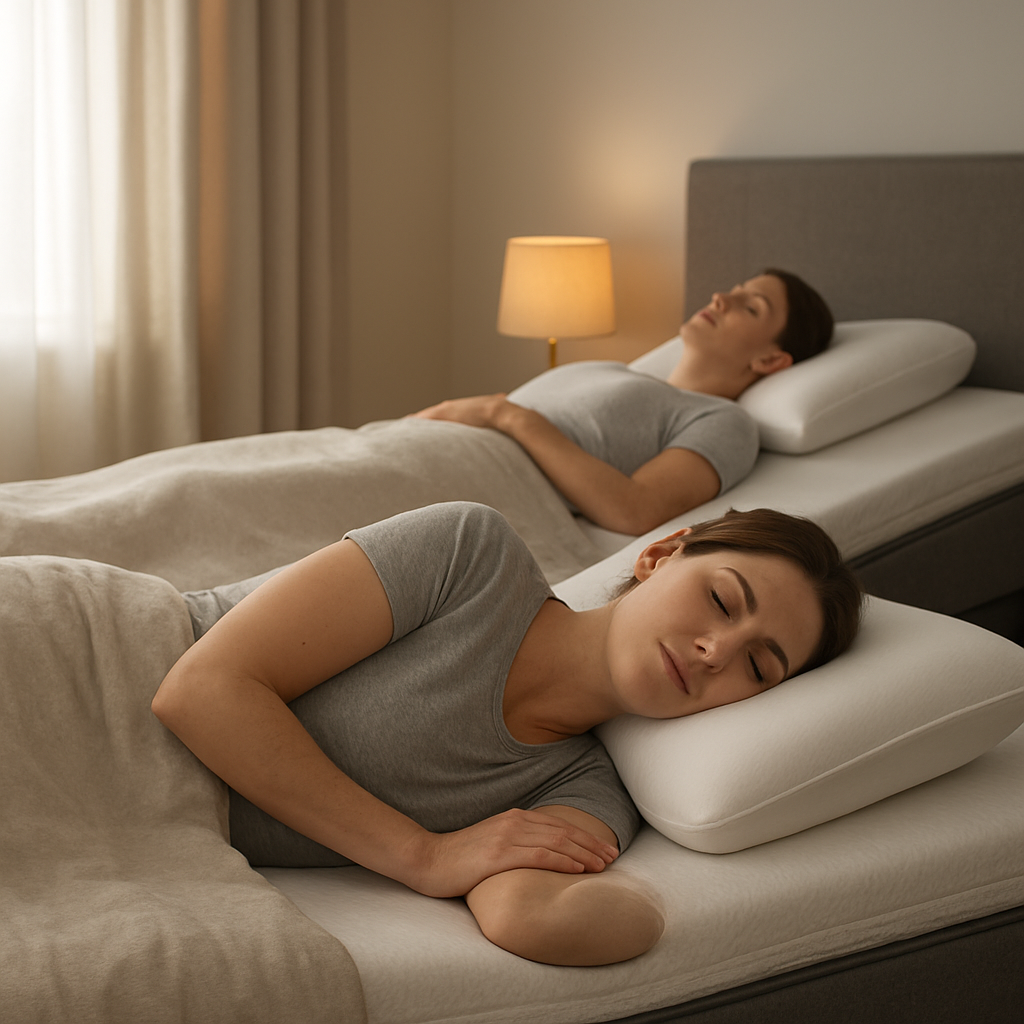
First thing’s first: figure out how you like to sleep when the bed is tilted. Do you drift onto your side as the head lifts? Or do you stay on your back, eyes closing as the incline eases pressure on your lower back? Knowing this tells you whether you need a higher loft to fill the gap or a flatter, firmer surface to keep your spine in line.
Here’s a quick self‑check. Lie down in your usual “watch‑TV‑in‑bed” position, then raise the head‑end to about 30 degrees. Notice where your head sits. If there’s a noticeable void between your neck and the pillow, you’ll likely need extra height. If the pillow pushes your chin forward, you’re probably over‑lofted.
Side sleepers – the loft puzzle
Side sleepers crave a pillow that fills the space from ear to shoulder. On an adjustable bed, that space can widen as the head‑end rises, so a pillow with adjustable loft (like a shredded‑memory‑foam fill) works wonders. Aim for a pillow that stays plump even when the bed moves – you don’t want it collapsing into a pancake every time you raise the foot‑end.
Back sleepers – the sweet spot
Back sleepers need just enough support to keep the cervical spine neutral. Too much loft will tilt the head forward, causing that dreaded morning “stiff‑neck” feeling. A medium‑firm pillow that holds its shape while you recline is ideal. If you notice a gap at the base of your skull, try a slightly thicker pillow or a pillow with a removable insert.
Now, think about any health considerations. Chronic pain sufferers, NDIS participants, or older adults often benefit from a pillow that offers gentle contouring without excessive pressure. A pillow with a breathable, washable cover can also help keep skin comfortable if you tend to sweat during the night.
Tip: grab a notebook or your phone and jot down how your neck feels after a night in each position – tight, neutral, or strained? Those notes become your personal “pillow passport” and guide you to the best pillow for adjustable bed use.
Once you’ve nailed down your preferred position, it’s time to match it with the right support level. Think of it like pairing a wine with a meal – the right combination makes the whole experience sing.
For side sleepers who love a high loft, look for pillows that let you add or remove fill. For back sleepers who prefer a lower profile, a pillow that stays firm but not too stiff is the sweet spot. And if you share the bed, consider a split‑design pillow or a non‑slip cover so each partner gets the support they need without the pillow sliding off when the bed adjusts.
Finally, give the pillow a test run before you commit. Many retailers, including Sleep Sophie, let you try a pillow for a few nights. Use that trial period to see how the pillow behaves when you raise the head‑end, lower it, and even sit up. If it shifts, rolls, or feels too soft, keep searching – the perfect fit is worth the extra minutes.
Assessing your sleep position and support needs isn’t a one‑time thing. As your body changes or you try new incline angles, revisit these steps. The more you understand how your body interacts with the bed, the easier it becomes to pick the best pillow for adjustable bed comfort.
Step 2: Choose the Right Pillow Material for Adjustable Beds
Let’s get real: when the head of your bed angles up, the pillow you’ve been using can suddenly feel wrong. It’s not just about plushness; it’s about staying neutral in your neck as the base tilts. If you’ve ever woken with stiffness after a bedtime adjustment, you know what I’m talking about.
In our experience, loft and fill matter as much as the fabric surrounding them. An adjustable loft you can dial in helps you avoid chin-forward posture at higher angles. And a breathable cover keeps you cool when you’re perched on an incline all night long.
Our top pick for most people using an adjustable bed is Sleep Sophie’s Sophie Pillow. It’s designed for adaptable loft and a true 3‑in‑1 setup, so you can fine‑tune height night after night. It also stays in place as the bed moves, which is essential for caregivers who need a reliable setup for their loved ones.
So, what should you do next? Start with materials that match your needs and test how they behave at your usual incline. Memory foam, latex, and down alternatives each have strengths—and a pillow that lets you adjust loft makes life easier when angles change.
Memory foam is a solid contoured option. It hugs the neck and head and tends to hold shape even as you tilt. If you tend to overheat, pick a memory foam with a breathable shell or an open-cell design; the key is airflow so your neck stays comfortable as the base angle shifts.
Latex is another dependable choice. It’s resilient, holds its form, and breathes well—great if you want steady support without too much sinking. If you’re between soft and firm, latex can give you stable neck alignment while still feeling comfortable as you adjust the bed.
Down and down‑alternative pillows feel luxurious and cushioning, but they can flatten a bit under angle changes. Look for higher initial loft or pillows that let you add or remove fill. If you share a bed, consider a cover or design that keeps the pillow anchored as the frame moves.
Here’s a practical tip: prioritize an adjustable loft. A pillow like the Sophie Pillow, which lets you tweak height, makes a real difference across side-sleep and back-sleep positions. And if you want to explore other strong options, see a reputable guide to adjustable-bedding pillows—for example, a well‑regarded review of adjustable pillows like the Saybrook Adjustable Pillow.
When you’re shopping, also think about stability. A non-slip cover or simple attachment can prevent shifting during incline changes. Sleep Sophie offers choices that align with therapeutic needs and daily comfort, which matters for chronic pain relief and daily routines. Small tweaks here can translate into meaningful mornings, easier mornings, and better posture all night long.
For further reading on how pillow materials pair with adjustable beds, you can explore insights like Saybrook Adjustable Pillow review for a practical look at adjustable-loft options, and a broader discussion on balancing pillow choices with adjustable beds at Enhancing the comfort of your adjustable bed with pillows.
Step 3: Evaluate Pillow Height and Adjustability
Here’s the core reality: when you tilt an adjustable bed, head position shifts. The wrong loft makes your neck bend and your spine kink. So let’s dial in height that keeps that neutral line, night after night.
First, understand why height is a moving target. A pillow that feels perfect on flat ground can feel too low or too high once the bed lifts. That’s why adjustable loft is worth prioritizing.
Why loft matters at different angles
Your neck needs a gentle cradle, not a wedge under your chin. Side sleepers often need more loft to fill the space between ear and shoulder, while back sleepers want just enough height to maintain a straight line from head to spine. An adjustable loft can switch between those needs in minutes.
How to test pillow height in your bed
- Set the bed to your typical incline first (start around 15°, then try 30° and 45°).
- Lie on your back and then roll to your side with each height. Note how your neck feels and whether your chin tilts forward.
- Check for gaps: if you feel a space behind your neck, you need more loft; if your shoulders rise and your head tilts, you might be over-lofted.
- Assess motion stability: does the pillow stay put as the bed moves? If it slides, add a non-slip cover or consider a wedge to anchor it.
In our experience, a pillow with adjustable loft—like the Sophie Pillow—lets you fine‑tune height for both side and back sleeping. You can add or remove fill to hold the neck in a natural curve as the base changes angle. This isn’t just theory; it translates to fewer mornings with stiffness and more mornings where you actually feel rested.
For a quick reference on how different materials interact with height, see reputable guides on adjustable pillows. You’ll hear the same theme: loft is king when angles change, and a good cover or attachment helps a lot with stability. If you want a broader comparison beyond our brand, this shopper guide shows how different adjustable pillows perform in real tests. Consumer Reports’ adjustable-pillow ratings.
Want a simple rule-of-thumb? Test a couple of heights at your usual incline, then pick the one that keeps your nose roughly aligned with your chest and your spine straight. And yes, you’ll probably want a pillow that stays put without constant fiddling—stability matters as much as loft.
For a local-touch, Blissbury’s adjustable-height guide is a handy reference if you’re shopping for alternative options to dial in height. It walks through how smaller adjustments can matter and how to use contour shapes to support the neck. adjustable pillow height guide.
Does this actually fit your routine? If you’re navigating chronic pain or shared sleeping arrangements, a pillow with adjustable loft simplifies nightly setup and can cut down on morning stiffness. Take an hour tonight to test two loft levels, note how your neck feels, and pick the one that gives you a confident neutral spine by dawn.
In our experience, a pillow with adjustable loft can be a real game changer for people using an adjustable bed. We’ve seen how a flexible height setup reduces morning stiffness and keeps alignment intact, especially for those with chronic pain or caregivers guiding loved ones through bedtime routines. To explore a practical alternative, Blissbury’s guide provides helpful context for how small height tweaks make a big difference. It’s not a gimmick—it’s a simple, repeatable way to dial in comfort. And yes, Sleep Sophie offers the Sophie Pillow, a 3‑in‑1 option designed to adapt to your loft needs as you move through the night.
Tip in practice: Start with two loft levels at your usual incline. Sleep on your back and then on your side. Note which height keeps your neck and spine in a straight line. If you share a bed, ensure the pillow stays put as the frame tilts. A stable setup is almost as important as the loft itself.
Step 4: Compare Top Pillow Options
Alright, you’ve already figured out your sleep position and tested a couple of loft levels. Now it’s time to line up the actual pillows that could become your nightly side‑kick. Comparing a handful of options side‑by‑side saves you from buying a pillow that feels great on a flat mattress but turns into a limp noodle when the head‑board lifts.
Does that sound familiar? You’ve probably bought a pillow once, loved the feel, only to discover it slides off the edge the moment you raise the bed. Let’s make sure that doesn’t happen again.
Why a quick comparison helps
When you look at features in isolation – say, “memory foam” or “adjustable loft” – you miss the bigger picture. The best pillow for an adjustable bed needs three things: true loft adjustability, a fill that stays supportive at any angle, and a cover that breathes when you’re propped up for reading.
That’s why we’ve boiled the data down to a simple table. Grab a pen, or just keep scrolling – either way, you’ll see which model ticks the boxes that matter most to you.
Top picks at a glance
We pulled data from a trusted review site (Mattress Nerd’s adjustable pillow guide) and mixed in our own hands‑on experience with Sleep Sophie’s Sophie Pillow. Here’s a snapshot:
| Pillow | Adjustable Loft? | Primary Fill | Best For |
|---|---|---|---|
| Sophie Pillow (Sleep Sophie) | Yes – removable layers | Hybrid memory‑foam + polyester | NDIS participants, chronic‑pain sleepers, caregivers |
| Saatva Latex Pillow | Yes – zip‑adjustable height | Shredded natural latex + down‑alternative | Hot sleepers, eco‑conscious buyers |
| Layla Kapok Pillow | Yes – zip pockets for fill | Kapok fibers + shredded memory foam | Side sleepers who want plush feel without heat |
Notice how each option offers a different material combo. The Sophie Pillow’s hybrid core is designed to stay soft enough for a gentle incline but firm enough to keep your neck in a neutral line – a sweet spot for anyone with therapeutic needs.
The Saatva Latex leans on natural latex, which stays cool and resilient even when the bed is tipped up to 45 degrees. That makes it a solid pick if you tend to overheat while reading in bed.
Layla’s kapok‑plus‑foam blend feels almost cloud‑like, which many side sleepers rave about. The trade‑off? It can lose a bit of loft after months of heavy use, so you’ll want to keep an eye on the fill level.
How to test each pillow on your adjustable bed
1. Set the head‑board to your most common incline (15°, 30°, or 45°).
2. Place the pillow on the mattress, then lie on your back. Check whether your chin stays level with your chest.
3. Roll onto your side; the pillow should fill the gap between ear and shoulder without pushing your head forward.
4. Raise the bed a few inches while you’re still in position – does the pillow stay put, or does it slide?
Take notes for each model. A quick “thumbs‑up/thumbs‑down” system works wonders: 👍 for comfort, 👎 for sliding or heat.
Once you’ve logged a night or two, compare your scores against the table. The pillow that consistently earns more thumbs‑up across angles is the one that will truly be the best pillow for an adjustable bed in your daily routine.
One final tip: if you share the bed, pick a pillow with a non‑slip cover or add a simple strap. It’s a tiny tweak that saves a lot of fiddling when the bed moves for a bedtime story or a quick stretch.
Now you’ve got a clear, side‑by‑side view of the market’s top contenders. Choose the one that aligns with your comfort priorities, give it a night’s trial, and say goodbye to morning stiffness.
Step 5: Consider Health and Comfort Certifications
When you’re hunting for the best pillow for adjustable bed, it’s easy to get lost in loft numbers and fabric feels. But have you ever stopped to wonder whether the pillow you’re eyeing is actually breathing easy and keeping chemicals at bay?
That’s where health‑and‑comfort certifications swoop in like a quiet guardian. They’re the short‑hand way of saying, “We’ve tested this pillow for emissions, allergens, and eco‑integrity, so you don’t have to guess.”
First up, look for the GREENGUARD badge. It tells you the pillow meets strict indoor‑air‑quality standards and emits fewer volatile organic compounds (VOCs). The Coop Original Adjustable Pillow proudly displays GREENGUARD and CertiPUR‑US certifications, meaning the foam blend has been independently tested for low emissions and durability.
Next, keep an eye out for organic seals like GOTS (Global Organic Textile Standard) or GOLS (Global Organic Latex Standard). Those symbols guarantee that the fibres, latex, or cotton used aren’t drenched in pesticides or synthetic chemicals. The Avocado Green Pillow is a good example – it’s GREENGUARD Gold, GOTS‑certified cotton, and GOLS‑certified latex all rolled into one.
So how do you actually verify those badges?
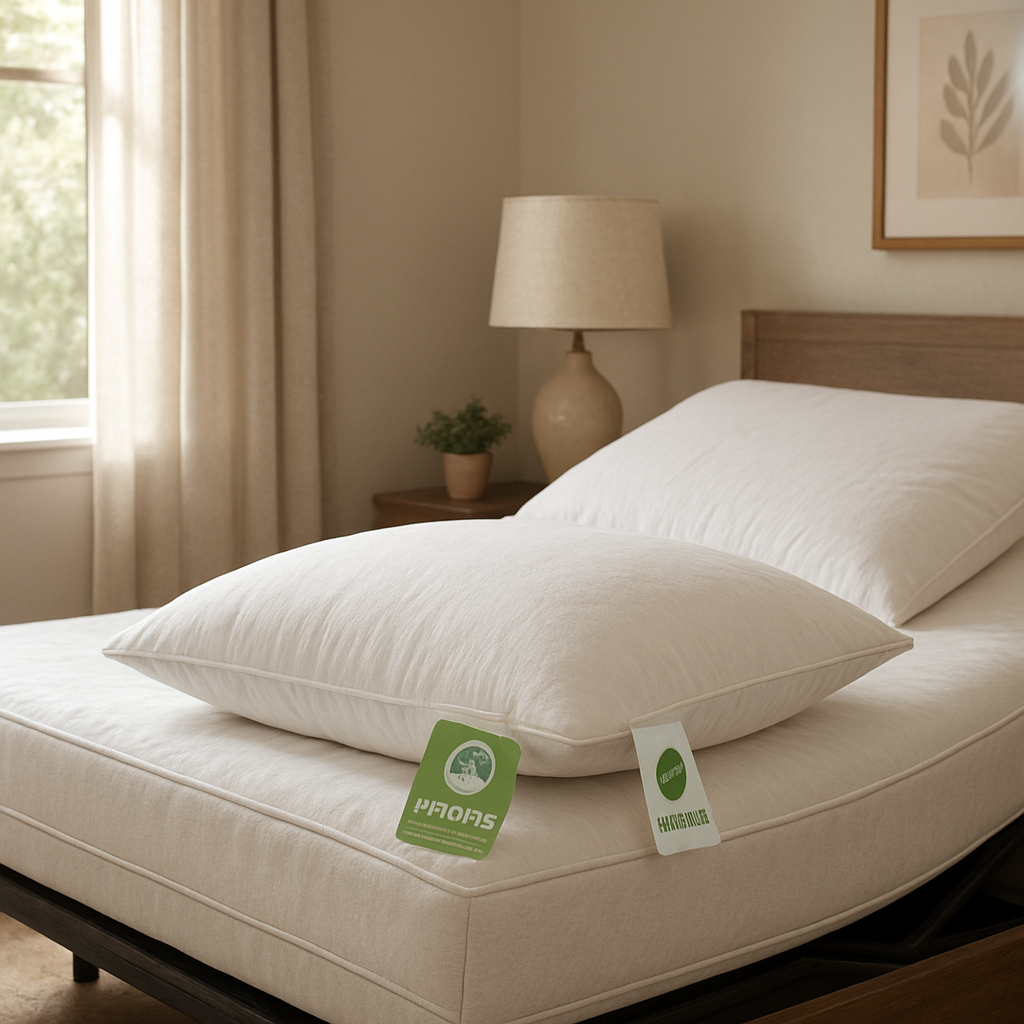
- Check the product tag or packaging for the official logo – it should be the exact mark, not a blurry imitation.
- Visit the manufacturer’s website and look for a dedicated certifications page or PDF download.
- For extra peace of mind, search the certifying body’s online database (GREENGUARD, CertiPUR‑US, GOTS) to confirm the model number.
Why does this matter for chronic‑pain sleepers or NDIS participants? A pillow that off‑gasses less can reduce airway irritation, which in turn lessens nighttime coughing and the need to shift positions – a common trigger for neck strain. Plus, hypoallergenic covers lower the risk of skin flare‑ups for anyone with sensitive skin.
Here’s a quick way to blend certifications into your pillow‑shopping routine:
- Set your adjustable bed to the angle you use most.
- Lay the pillow on the mattress and do your usual loft test.
- While you’re testing, glance at the label – does it have GREENGUARD, CertiPUR‑US, or an organic seal?
- If the pillow passes both comfort and certification checks, give it a night‑long trial.
Tip: for caregivers, pick a pillow with a washable, certified‑low‑VOC cover. It’s easier to keep clean and maintains the certification’s air‑quality promise over time.
And remember, a certified pillow isn’t a magic cure‑all, but it removes a hidden source of discomfort that many people overlook. Pair that with the right loft (which you already nailed in the previous steps) and you’ve got a solid foundation for waking up pain‑free.
Ready to put this into practice? Grab a notebook, write down the certifications you spot, and match them against your comfort scores. The pillow that checks both boxes is likely the one that will keep you snug, supported, and breathing easy all night.
Step 6: Test and Return Policies
Alright, you’ve narrowed down a pillow that feels right on the loft test and it even carries the right certifications. Now comes the part most shoppers skip: figuring out how to truly test it at home and what to do if it doesn’t live up to the promise.
Why a real‑world trial matters
Imagine you’ve just bought a pillow that looks perfect on the website, but after a night of reading on your adjustable bed, you wake up with a sore neck. That’s the gap between a photo and a lived experience. A solid return policy lets you bridge that gap without risking a wasted purchase.
So, what should you look for in a trial period? Think about the typical night you spend on your bed – the angle you use, whether you read, watch TV, or sleep straight away. The best pillows for adjustable beds usually offer at least a 30‑night risk‑free trial, giving you enough time to experience a few different incline settings.
Step‑by‑step: How to test your pillow properly
1. Set your usual incline. If you normally sleep with the head‑board at 30°, adjust the bed to that angle right away.
2. Use your normal bedtime routine. Read a book, scroll on your phone, or watch a show – whatever you normally do before falling asleep. Notice how the pillow feels against your skin and whether it stays in place.
3. Switch positions. Roll onto your side, then back onto your back. Does the loft stay consistent? Does the pillow shift or flatten?
4. Check temperature. After an hour, feel the cover. Is it still cool or has it gotten uncomfortably warm? Breathable fabrics should stay relatively neutral.
5. Sleep through the night. The real test is a full sleep cycle. In the morning, assess your neck alignment, any stiffness, and overall comfort.
What to do if the pillow falls short
If after a week you notice that the pillow slides, loses loft, or gives you a sore neck, it’s time to invoke the return policy. Most reputable sellers will ask you to contact their support team, provide a short note about why it didn’t work, and then arrange a pickup or drop‑off.
Don’t forget to keep the original packaging – many return policies require it for a hassle‑free refund. And take a photo of the pillow’s condition; it helps smooth out any back‑and‑forth with customer service.
Key policy details to verify before you buy
Length of trial. Look for at least 30 nights; some brands even extend to 60 or 90 days.
Return shipping costs. Ideally the seller covers postage both ways. If you have to pay, weigh that against the pillow’s price.
Refund vs. store credit. A full cash refund is the most flexible option. Store credit can be okay if you’re certain you’ll buy another pillow from the same brand.
Condition requirements. Some policies only accept returns if the pillow is in “new” condition. That’s why the trial period should be long enough to test but short enough to keep the pillow pristine.
Tips for a smooth return experience
• Keep your receipt and order confirmation handy – a quick email search can save you minutes.
• Write a brief note describing the issue (e.g., “pillow shifts when the bed tilts to 30°”). Clear feedback often speeds up the process.
• If you bought through an online marketplace, check their specific return timeline – it can differ from the brand’s own policy.
• For caregivers, note any hygiene concerns. A washable, low‑VOC cover can be cleaned before sending it back, ensuring you meet “new condition” clauses.
Putting it all together
Testing a pillow isn’t just about fluff; it’s about confirming that the best pillow for adjustable bed truly supports your neck, stays put, and breathes when you need it most. By following the simple checklist above, you’ll know exactly when a pillow earns its place on your bed and when it’s time to send it back.
And remember, a generous return policy is a sign of confidence from the maker. If a brand can stand behind its product for a month or more, that’s already a big hint that they’ve done the research and testing themselves.
So, set your incline, spend a few nights with the pillow, and if it doesn’t feel like a match, don’t hesitate to return it. Your sleep – and your neck – will thank you.
Conclusion
We’ve walked through everything you need to feel confident picking the best pillow for adjustable bed – from assessing your sleep position to testing loft, material, and stability.
Remember, the pillow that keeps your neck in a neutral line whether the head‑board is at 15°, 30° or 45° is the one that will protect you from morning stiffness. Real‑world users, especially NDIS participants and caregivers, report noticeable relief when they switch to a pillow that stays put and breathes.
Here are three quick actions you can take tonight: (1) set your bed to your usual incline, (2) try two loft levels of your favourite pillow and note any gaps or chin‑forward pressure, (3) check that the cover doesn’t shift when you sit up to read.
If the pillow fails any of those checks, don’t hesitate to use the trial period and return it – a generous policy is a sign the maker believes in the product.
For most sleepers who need flexibility, our go‑to choice remains the Sophie Pillow. Its removable layers let you dial loft up or down in seconds, and the hybrid foam core holds shape even at steep angles, which is why we see fewer complaints from chronic‑pain patients.
Finally, keep a simple log on your phone: date, incline, pillow setting, and how your neck feels in the morning. After a week you’ll have clear data to decide which pillow truly earns a permanent spot on your adjustable bed.
FAQ
What should I look for when choosing the best pillow for an adjustable bed?
First, check loft adjustability – you’ll want to add or remove layers as the head‑board angle changes. Next, consider a supportive core that holds shape at 15°, 30° or 45°; hybrid memory‑foam or latex works well. A breathable, non‑slip cover keeps the pillow from shifting when you sit up. Finally, verify any health certifications if you have sensitivities, because cleaner materials mean fewer night‑time irritations.
Can a pillow that’s great for a flat mattress still work on an adjustable bed?
Not always. A pillow that feels perfect on a flat surface can become too low when the bed tilts, forcing your chin forward. That’s why the best pillow for adjustable bed families includes removable layers or zip‑adjustable height. Without that flexibility, you’ll likely wake with neck tension after a night of reading or watching TV in a reclined position.
How many loft levels should I test before deciding?
We recommend trying at least two settings: one that matches your side‑sleep height and another for back‑sleep. Set the bed to your typical incline, lie down, and note whether there’s a gap behind your neck or if your chin lifts too high. If you’re sharing the bed, repeat the test on the other side. A simple log on your phone makes spotting the sweet spot easy.
Is there a difference between memory‑foam and latex pillows on an adjustable base?
Memory‑foam tends to hug the contours of your head and neck, staying firm even when the base tilts. Latex, on the other hand, is more resilient and breathes better, which helps if you tend to overheat while propped up. Both can work, but make sure the model you pick offers adjustable loft; that’s the real game‑changer for any incline.
What about pillows for caregivers who need to adjust the bed frequently?
For caregivers, stability is key. Look for a pillow with a non‑slip cover or a small strap that anchors it to the mattress. Adjustable‑loft designs let you dial the height once and then leave it alone, even when you raise the head‑board to read a bedtime story. A pillow that stays put saves you time and prevents the nightly fiddling that can disturb a sleepy child or client.
Do trial periods really matter for the best pillow for adjustable bed?
Absolutely. Most people need a few nights to experience how the pillow behaves at different angles, temperatures, and sleeping positions. A 30‑night risk‑free trial gives you enough time to test side‑sleep, back‑sleep, and the occasional mid‑night sit‑up. If the pillow slides or loses loft, a generous return policy lets you switch without penalty.
How often should I reassess my pillow’s loft?
As your body changes or you adjust the typical incline, revisit the loft test every few months. Pregnancy, weight fluctuation, or a new medication can shift how you sleep. A quick check – set the bed to your usual angle, lie down, and see if you still have that neutral neck line. Small tweaks keep your pillow performing at its best for years.