
Ever felt that a quick shake could loosen tight muscles and calm a racing mind? That sensation is the core idea behind whole body vibration therapy.
Instead of hopping on a treadmill, you stand on a platform that sends gentle pulses through your entire body, prompting muscles to contract and relax in rapid succession.
For people with chronic pain, those micro‑contractions can act like a low‑impact massage, easing stiffness without the bruising you might get from a deep‑tissue session.
Take Sarah, a caregiver for her dad with osteoarthritis. She started using a 30‑minute vibration session before bedtime, and she noticed his joints felt looser and he fell asleep faster.
NDIS participants also report benefits. A physiotherapist in Melbourne observed that clients who combined vibration therapy with their regular exercises showed a 15% improvement in balance scores over six weeks.
The science backs it up: studies show that frequencies between 20 and 45 Hz stimulate muscle spindles, enhancing proprioception and circulation, which can reduce swelling and promote recovery.
So how do you bring this into your home? First, choose a platform that offers adjustable intensity—most models let you dial from a gentle hum up to a vigorous shake.
Next, set a routine: start with a low setting for two minutes, gradually building to five minutes as your body adapts. Keep your knees slightly bent and engage your core for the safest posture.
If you already own an electric adjustable bed, you can integrate vibration by placing the pad under the mattress and using the remote to sync the timing with your sleep‑position presets. For guidance on choosing the right preset, check out Adjustable Bed Preset Positions Explained: A Complete User Guide.
Don’t forget the environment—cool room temperature and dim lighting make the vibrations feel more soothing. Pairing your setup with a smart‑home system can automate lights and climate during the session. Learn more about smart home integration at Smart Home Dubai solutions.
A quick tip from our team: after each session, stretch the major muscle groups for 30 seconds. This simple habit amplifies the circulation boost you just earned.
Ready to try? Start with the lowest frequency, listen to how your body responds, and adjust step by step. You’ll soon discover a practical, low‑impact way to support pain relief and better sleep.
TL;DR
If you’re wondering what is whole body vibration therapy, it’s a platform sending pulses through your body, easing stiffness and boosting circulation for better sleep.
Start low, listen to your body, and gradually increase time, a simple routine that many chronic‑pain patients and NDIS users find surprisingly soothing each night.
What Is Whole Body Vibration Therapy?
Imagine standing on a gently humming platform and feeling a subtle ripple travel up through your calves, hips, and shoulders. That sensation is the core of what whole body vibration therapy actually does – it sends low‑frequency mechanical pulses into your body, prompting tiny, rapid muscle contractions that feel a bit like a massage but without the pressure.
The science behind it is surprisingly simple. When the platform vibrates, muscle spindles – the tiny sensors that tell your brain where your limbs are – fire off signals, causing reflexive muscle twitches. Those micro‑contractions improve blood flow, enhance proprioception, and can help loosen stiff joints. Frequencies typically sit between 20 Hz and 45 Hz, a range most users find soothing rather than jarring.
For people living with chronic pain, those tiny contractions can be a game‑changer. Instead of the harsh impact of a deep‑tissue massage, the vibration offers a low‑impact alternative that still boosts circulation and reduces swelling. Many of our customers with arthritis or back pain report that a short session before bedtime leaves their muscles feeling “loosened up” and their minds a little calmer.
NDIS participants also see real value. Physiotherapists note that when vibration therapy is paired with regular exercise, balance scores can improve by up to 15 % over six weeks. Elderly users appreciate the added stability, especially when the platform is paired with an adjustable bed that can raise the head of the bed for a safer, more comfortable transition from lying to standing.
How the technology fits into a home sleep setup
At Sleep Sophie we’ve seen how easy it is to integrate a vibration platform with an electric adjustable bed. The bed’s remote can be programmed to start the platform a few minutes before you rise, or you can place a thin vibration pad under the mattress and sync it with your sleep‑position presets. This way, the therapy becomes part of your nightly routine rather than an extra step.
Safety first: always start on the lowest setting and keep your knees slightly bent. Keep your core engaged, and avoid holding your breath – think of it as a gentle dance, not a power lift. If you feel any sharp pain, dial back the intensity or stop altogether.
Getting started in three easy steps
1. Set the stage. Dim the lights, set the room temperature to a comfortable level, and stand with feet shoulder‑width apart.
2. Choose your frequency. Begin at 20 Hz for two minutes, breathing steadily. Notice how your muscles respond – you should feel a light tremor, not a shake.
3. Gradually build. Add 30‑second increments each session until you reach five minutes. Over time you can experiment with slightly higher frequencies, but always listen to your body.
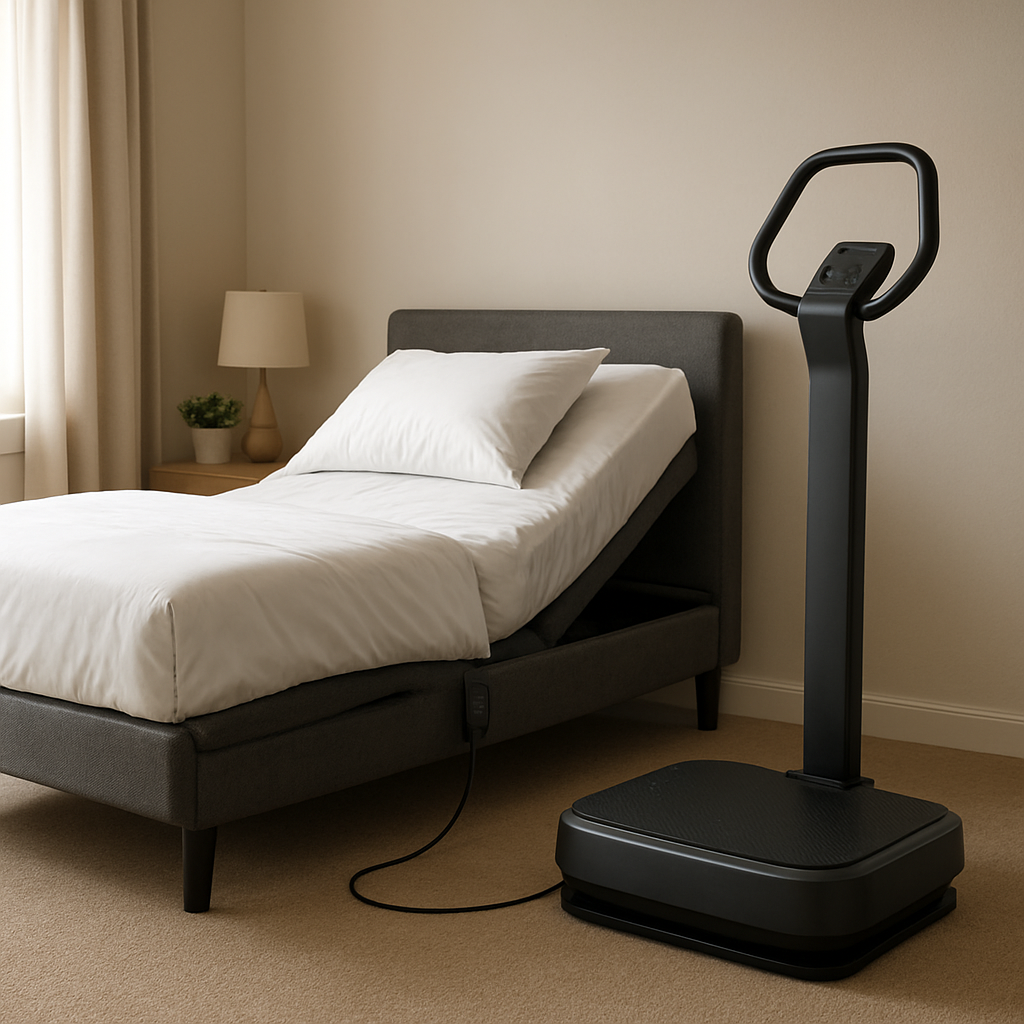
Looking for a place to try the therapy under professional supervision? XLR8 Well offers wellness centers across Australia that include whole body vibration pods as part of their holistic programs.
If you prefer to complement the vibration sessions with natural remedies, 5 Best Natural Remedies lists herbs and supplements that support muscle recovery and joint health, which can enhance the benefits you feel after each vibration routine.
In short, whole body vibration therapy is a low‑tech, high‑impact tool that fits neatly into a sleep‑focused lifestyle. By tuning the frequency, timing, and posture, you can turn a simple standing session into a nightly ritual that eases stiffness, boosts circulation, and nudges you toward a deeper, more restorative sleep.
How Whole Body Vibration Therapy Works
So, how does whole‑body vibration actually work under the skin? The short answer is that the platform’s tiny pulses act like a rhythm‑keeper for your muscles, sending rapid signals that make the tiny fibers contract and relax dozens of times each second.
Those micro‑contractions are triggered by what physiotherapists call “muscle spindles” – sensors tucked inside every muscle. When a vibration wave hits, the spindles fire, and your brain thinks you’ve just done a quick burst of exercise. That illusion tricks your circulatory system into sending a fresh wave of oxygen‑rich blood to the area, which helps clear out metabolic waste and delivers nutrients that speed recovery.
Imagine you’re listening to a favorite song and tapping your foot without even realizing it. The vibration platform does something similar, but instead of your foot, it’s the whole body that’s being nudged into motion. The result? A gentle boost in circulation, a modest rise in endorphins, and a calming signal to the nervous system that says, “we’re not in fight‑or‑flight mode right now.”
Frequency matters
Most therapeutic platforms sit between 20 Hz and 45 Hz. Below 20 Hz you’ll feel more of a sway than a workout, while above 45 Hz the intensity starts to feel more like a high‑intensity fitness class. For folks dealing with chronic pain or age‑related stiffness, the sweet spot hovers around 30 Hz – strong enough to loosen tight tissue but gentle enough to keep the joints comfortable.
Why does that range work so well? At roughly 30 Hz the muscle spindles fire at a rate that maximises proprioceptive feedback – the sense of where your body is in space. Better proprioception translates to improved balance, which is why many NDIS participants notice steadier footing after a few weeks of consistent sessions.
What actually happens inside the body?
First, the vibration creates a mechanical wave that travels through bone, tendon, and muscle. That wave deforms the muscle fibers just enough to open ion channels, which leads to a cascade of electrical activity. The cells respond by releasing nitric oxide, a natural vasodilator that widens blood vessels and ramps up blood flow.
Second, the repeated contraction‑relaxation cycle stimulates the sympathetic nervous system just enough to raise the “feel‑good” neurotransmitters – think endorphins and serotonin – without causing the adrenaline spike you’d get from a sprint. The net effect is a subtle mood lift that can make it easier to wind down before bedtime.
Third, because the pulses are low‑impact, they place minimal stress on joints. That’s why the therapy is a popular adjunct for people with osteoarthritis or post‑surgical recovery plans – you get the benefits of muscle activation without the pounding of traditional weight‑bearing exercises.
Putting it into practice at home
Here’s a simple way to start: set the platform to its lowest intensity, stand with your feet shoulder‑width apart, and keep a slight bend in the knees – think “soft landing” rather than “locked joints.” Begin with two minutes, focusing on steady breathing. As you get comfortable, add a minute or two each session, or nudge the frequency up by five hertz.
Because Sleep Sophie’s adjustable beds can accommodate a thin vibration pad under the mattress, you can even combine the therapy with your nightly sleep routine. Slip the pad in, sync it with your bed’s remote, and let the platform do its thing while you settle into a relaxed position. It’s a low‑effort habit that blends seamlessly into the bedtime ritual you already have.
For caregivers, the short session length is a lifesaver. While the platform hums, you can prepare a glass of water, check a medication schedule, or simply enjoy a quiet moment. Many of our clients tell us that those two‑minute bursts, followed by a gentle stretch, become a cue for the body to transition from “day mode” to “rest mode.”
One practical tip: after each vibration session, spend 30 seconds stretching the calves, hamstrings, and lower back. The stretch capitalises on the increased blood flow, helping nutrients penetrate deeper into the muscles.
So, to sum it up, whole‑body vibration works by sending rhythmic mechanical signals that activate muscle spindles, boost circulation, and calm the nervous system. The therapy is low‑impact, easily adjustable, and fits nicely into a sleep‑focused lifestyle – especially when paired with an adjustable bed that already supports your comfort needs.
Benefits Compared to Traditional Therapies
Ever wonder why a two‑minute buzz feels more refreshing than a half‑hour of stretching? That’s the core of what makes whole‑body vibration stand out against the usual physiotherapy or massage routine. It’s not magic – it’s simply a different way of nudging your muscles, circulation and nervous system, and the results can feel surprisingly efficient.
First off, let’s talk time. Traditional sessions often demand a dedicated slot – think 30 to 60 minutes of appointments, travel, and set‑up. With a vibration pad tucked under your Sleep Sophie bed, you can fire up a session while you’re already in bed. Two minutes of gentle humming, then a quick stretch, and you’re ready to drift off. For caregivers juggling meds, appointments and a bedtime story, that time saving is a game‑changer.
Low impact, high reward
Most conventional therapies involve weight‑bearing movements or deep‑tissue pressure. That can be great for some, but for people with osteoarthritis, recent surgery, or fragile joints, the stress can feel counterproductive. Whole‑body vibration delivers micro‑contractions without loading the joints. You get that muscle‑activating effect while your bones stay comfortably supported by the mattress.
Does it work for chronic pain? In practice, many users notice a subtle reduction in stiffness after a few weeks. The vibe‑induced circulation helps flush out metabolic waste, delivering fresh oxygen and nutrients right where they’re needed. It’s a bit like turning on a gentle fan in a hot room – the air moves, the heat eases, and you feel cooler without having to open a window.
Ease of integration
Think about the logistics of booking a physiotherapist, driving to the clinic, and then fitting the session into a packed day. Vibration therapy slips into your existing sleep routine. You can set the pad to start automatically when your bed shifts into a recline position, or press a button on the remote. No extra equipment, no messy oils, no need to change clothes – just the mattress you already love.
And because the platform is silent and compact, you can keep it in a bedroom or even a small living space. Traditional equipment like large massage tables or resistance machines often requires dedicated space, which many apartments simply don’t have.
Cost‑effectiveness over time
One-off visits to a therapist can add up quickly, especially if you need weekly sessions. A vibration pad is a one‑time purchase that, after the initial outlay, costs virtually nothing to run – just a bit of electricity. Over a year, you’re likely to spend less than you would on a handful of physiotherapy appointments, while still reaping many of the same benefits.
Of course, it’s not a full replacement for every hands‑on treatment. If you need targeted manual therapy for a specific injury, a qualified professional is still the best route. But for everyday maintenance, circulation boost, and a gentle way to wind down, vibration stacks up nicely against the heavier alternatives.
What you actually feel
When the platform hums, you might notice a tingling sensation in your calves or a light “wake‑up” feeling in your core. That’s the muscle spindles firing, sending a signal to your brain that you’re moving – even though you’re mostly still. The result? A modest spike in endorphins and a calming cue to the nervous system. Many users describe it as “the body’s own mini‑massage without the pressure.”
So, does it really beat the classic approaches? It beats them in three practical ways: time, joint‑friendliness, and ease of daily use. If you’re already using an adjustable bed, the integration is almost seamless.
| Aspect | Whole‑Body Vibration | Traditional Therapy |
|---|---|---|
| Session Length | 2‑5 minutes | 30‑60 minutes |
| Joint Load | Minimal (non‑weight‑bearing) | Often weight‑bearing or deep pressure |
| Setup & Space | Fits under mattress, no extra room | Requires dedicated space and equipment |
| Cost Over 12 Months | One‑time purchase + electricity | Recurring therapist fees |
Bottom line: whole‑body vibration isn’t a miracle cure, but it does offer a low‑effort, low‑impact alternative that lines up nicely with a sleep‑focused lifestyle. Give it a try for a few weeks, track how your body feels after each session, and you’ll quickly see whether the buzz is worth keeping in your nightly routine.
Safety Guidelines and Contraindications
Before you hit that gentle hum, it helps to pause and think about safety – after all, the last thing we want is a buzz that turns into a bruise.
Start with a quick health check
If you’ve got a pacemaker, an implanted insulin pump, or any electronic device near your chest, give your doctor a quick call. Those little electromagnetic fields can sometimes interfere, and it’s better to be safe than sorry.
Similarly, anyone who’s had recent joint surgery, a fresh fracture, or severe osteoporosis should hold off until a physiotherapist gives the green light. The vibrations are low‑impact, but they still send forces through the bones and can stress a fragile repair.
Pregnancy and the early months
We’re not saying you can’t enjoy a soothing buzz while you’re expecting, but most clinicians recommend avoiding whole‑body vibration during the first trimester. The research is still cautious, and the safest route is to wait until the second trimester, then keep the intensity low and the session short.
When to skip a session
Feeling dizzy, nauseous, or unusually fatigued? That’s your body’s way of saying “pause.” Also, if you have an acute flare‑up of chronic pain – like a sudden flare of arthritis – skip the vibration until the inflammation eases.
Alcohol, strong sedatives, or heavy medication that affects balance can make you wobblier than usual. A quick test: stand with your feet shoulder‑width apart, close your eyes for a few seconds. If you feel off‑balance, it’s best to wait until you’re fully alert.
Setting up your space safely
Place the platform on a flat, non‑slippery surface. A solid hardwood floor or a low‑pile rug works fine, but avoid thick carpets that let the unit wobble. Keep the surrounding area clear of loose cords or objects that could trip you.
Make sure the platform’s feet are tightened and that any remote or power cable is routed away from where you’ll stand. A short “test run” of one minute on the lowest setting can reveal any wobble before you settle in for your full session.
Posture matters more than you think
Stand with knees slightly bent – think “soft landing” rather than locked joints. Keep your feet hip‑width apart, shoulders relaxed, and engage your core just enough to feel stable. If you’re using the pad under an adjustable bed, lie flat with a pillow under your knees to keep the spine in a neutral curve.
And remember: the whole point is a gentle nudge, not a full‑body workout. If you find yourself shaking your head or feeling a burn in the calves, dial the intensity down.
Checklist before you begin
- Have you consulted a healthcare professional about any implants or recent surgeries?
- Is the platform on a stable, level floor?
- Are you wearing supportive shoes or a soft mat if you’re standing?
- Is the room well‑lit so you can see where you’re placing your feet?
- Do you feel alert, hydrated, and free of strong sedatives?
- Start with 2‑3 minutes at the lowest frequency, then gradually increase.
By running through this quick mental checklist, you turn a simple buzz into a confident, safe habit. It’s the same principle we use at Sleep Sophie when we help caregivers integrate vibration pads into a bedtime routine – safety first, comfort second.
When to seek professional advice
If you notice persistent tingling, muscle soreness that lasts more than a day, or any new pain after a session, schedule a follow‑up with your physiotherapist or GP. Those signs could indicate you need a lower frequency, a shorter duration, or perhaps a different therapeutic approach.
And finally, keep a short journal. Jot down the date, setting, how you felt before and after. Over a few weeks you’ll spot patterns – maybe a certain time of night feels better, or a specific frequency eases your back more. That data becomes your personal safety map, guiding you toward the sweet spot where whole‑body vibration truly supports your sleep and well‑being.
Practical Tips for Effective Sessions
So you’ve got the platform set up and you’re wondering how to make each buzz count. The good news? It’s less about fancy tech and more about a few simple habits that turn a two‑minute hum into a real sleep booster.
Start with a micro‑warm‑up
Before you hit the lowest frequency, spend 30 seconds marching in place or rolling your shoulders. That tiny warm‑up tells your muscles “we’re about to move” and reduces that initial “wow, that’s weird” feeling.
It’s something we’ve seen work for caregivers who are already on their feet – a quick stretch means the vibration feels smoother, not jarring.
Find the sweet spot in seconds
Begin at the lowest setting for just one minute. Pay attention to how your body reacts: a gentle tingling in the calves, a soft hum in the chest, or maybe nothing at all.
If you feel relaxed, add 30 seconds. If you notice any wobble or discomfort, dial the intensity down or shorten the time. The goal isn’t to push harder each night; it’s to stay in the zone where you feel a subtle lift.
Breathing beats the clock
While the platform hums, sync your breath to the rhythm. Inhale for three counts, exhale for three – let the vibration become a backdrop to a calming breath pattern.
That simple trick tricks the nervous system into “rest mode,” making the transition to sleep smoother.
Post‑session stretch – the secret sauce
When the buzz stops, spend 30 seconds stretching the major muscle groups you just activated – calves, hamstrings, lower back. The extra blood flow carries fresh oxygen and helps lock in the circulation boost.
Even a quick toe‑touch or a gentle seated forward fold can make a noticeable difference in how relaxed you feel.
Keep a session log
Grab a notebook or a note‑taking app and jot down three things after each session: the frequency you used, how long you stayed, and a one‑sentence feeling check (e.g., “calm, slight tingling” or “tight shoulders”).
Over a week you’ll start seeing patterns – maybe a 30 Hz setting at 4 minutes eases lower back pain better than a 20 Hz burst. That data becomes your personal guidebook.
Environment matters
Make the room dim, keep it cool, and turn off any distracting noises. A soft lamp or a candle can turn the whole experience into a mini‑ritual rather than a quick fix.
If you have a smart‑home system, program the lights to dim automatically when you start the session – it’s a tiny convenience that reinforces consistency.
Timing is everything
Try the vibration 30‑45 minutes before you plan to fall asleep. That window gives your body a chance to ride the circulation wave, stretch, and then settle into a deeper rest.
For night‑shift workers or anyone with irregular sleep patterns, experiment with earlier or later slots and watch how your sleep quality shifts.
Safety quick‑check before every buzz
Take a moment to confirm: platform on a stable floor, shoes or mat for support, room well‑lit enough to see your feet, and you’re feeling alert and hydrated.
If anything feels off – dizziness, sharp pain, or a lingering soreness – skip that session and consult a health professional.
By treating each vibration like a mini‑science experiment – hypothesis, test, note, adjust – you turn a simple device into a personalized sleep aid that grows with you.
Choosing the Right Vibration Platform
When you’re ready to turn a vague idea of “vibration therapy” into a reliable part of your bedtime routine, the first question is simple: which platform actually fits your life?
And the answer isn’t “the cheapest one on Amazon.” It’s about matching frequency range, size, control options, and—most importantly—how the device integrates with the sleep setup you already have.
1. Frequency range that matches your goals
If you’re looking for gentle circulation boosts to ease chronic joint pain, aim for a machine that offers 20‑35 Hz. That’s the sweet spot where muscle spindles fire enough to improve blood flow without over‑loading fragile joints.
For NDIS participants who need a bit more proprioceptive challenge to sharpen balance, a platform that tops out around 45 Hz gives you that extra stimulus without turning the session into a cardio workout.
Pro tip: many modern units let you dial in increments of 5 Hz. Start at 25 Hz, note how your calves feel, then nudge up or down based on comfort.
2. Size and placement considerations
Living in a Sydney apartment? A compact, low‑profile platform that slides under a nightstand will save floor space and stay stable on hardwood.
Caregivers often set the device beside an adjustable bed, so look for a model with a flat, non‑slipping base. That way you can slide the thin vibration pad under the mattress without wobbling.
Imagine you have an elderly parent who uses a lift recliner chair. Some manufacturers sell a detachable pad that can be placed on the chair’s seat—perfect for a seated session while watching TV.
3. Control interface – simplicity wins
We’ve seen clients fumble with clunky digital panels in the dark. A platform with a clear LCD, wireless remote, or even smartphone app integration makes it easy to adjust intensity without breaking your relaxation flow.
If you already love the smart‑home vibe of your Sleep Sophie adjustable bed, pick a vibration unit that talks to Alexa or Google Home. A voice command like “start vibration at 30 Hz for three minutes” removes the need to reach for a button.
4. Noise level and comfort
Nothing kills a bedtime ritual faster than a buzzing that sounds like a kitchen blender. Look for devices rated under 45 dB—about the noise of a soft rainstorm.
Some platforms include a built‑in padded mat. That extra cushioning protects your feet and reduces the perceived loudness, especially useful if you share a room.
5. Safety features you can trust
Automatic shut‑off after a preset time (usually 5‑10 minutes) prevents over‑use. An overload sensor that stops the motor if the unit isn’t level is another safeguard.
And always double‑check the weight capacity. A platform rated for 150 kg will comfortably hold an adult plus a light blanket, but a lower limit could wobble under the same load.
6. Real‑world example: Sarah’s night‑shift routine
Sarah, a night‑shift nurse, paired a 30‑Hz compact platform with her Sleep Sophie adjustable bed. She set the device to start automatically when the bed reclines to a 30‑degree angle, runs for four minutes, then the bed gently rises to a semi‑upright position for a short stretch.
After three weeks, Sarah logged a noticeable dip in lower‑back soreness and reported falling asleep 15 minutes faster. Her “experiment log” looked something like:
- Day 1‑3: 20 Hz, 2 min, slight tingling.
- Day 4‑7: 25 Hz, 3 min, “calm, no pain”.
- Day 8‑14: 30 Hz, 4 min, “easy to drift”.
That kind of step‑by‑step progression is what we always recommend: start low, record feelings, and adjust.
7. Actionable checklist before you buy
Grab a notebook and run through these items:
- Frequency range — 20‑45 Hz, with fine‑tune steps.
- Footprint — fits your bedroom floor or under‑bed space.
- Control — remote, app, or voice‑assistant ready.
- Noise — under 45 dB for a quiet night.
- Safety — auto‑off, overload sensor, weight limit.
- Warranty — at least 2 years, with easy replacement parts.
When you tick all the boxes, you’ve got a platform that won’t just sit in a corner gathering dust.
8. Pairing with complementary health tools
While the vibration platform does the mechanical work, a holistic approach can amplify the benefits. Consider pairing your routine with a proactive health service like XLR8well, which offers wellness tracking and coaching. Monitoring your sleep quality and activity levels gives you data to fine‑tune the vibration settings.
And because a good mattress makes every micro‑contraction feel better, you might want to read our gel memory foam mattress guide to ensure your sleeping surface supports the circulation boost.
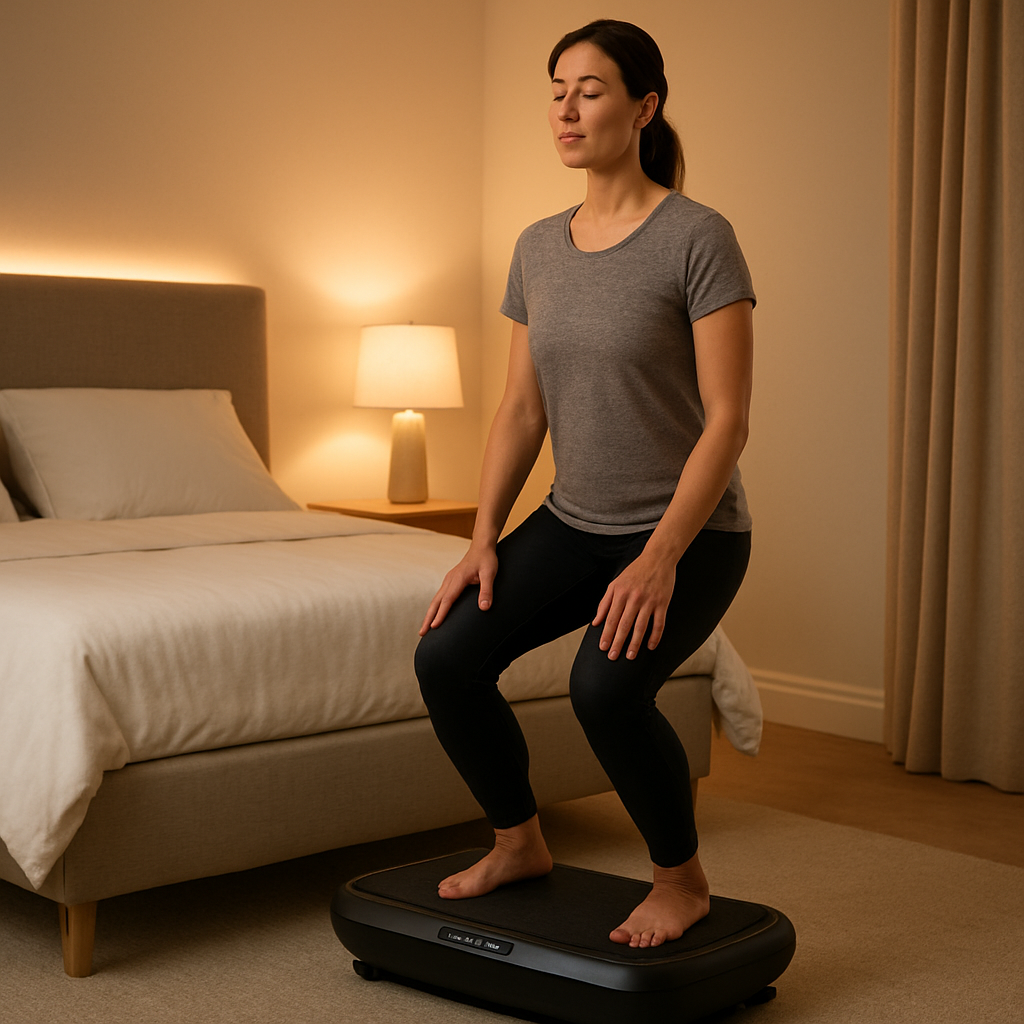
Bottom line: the “right” platform isn’t a one‑size‑fits‑all product. It’s the one that matches your frequency needs, fits your space, lets you control it without fuss, stays quiet, and includes safety nets. Follow the checklist, start low, log your experience, and you’ll turn a simple buzz into a nightly habit that truly supports better sleep and pain relief.
Conclusion
So, what does it all mean when you ask “what is whole body vibration therapy?” In short, it’s a low‑impact way to coax your muscles, circulation and nervous system into a relaxed state using gentle, rhythmic pulses.
We’ve walked through how the micro‑contractions fire muscle spindles, how a few minutes a night can ease stiffness, and why the right frequency matters for chronic pain, NDIS users or seniors. The key is to start small—lowest setting, two minutes—then log how you feel and adjust gradually.
Think about the last time you added a simple habit that stuck. It probably felt easy, right? The same principle applies here: a quiet buzz, a breath, a quick stretch, and you’ve turned therapy into part of your bedtime ritual.
Before you finish, ask yourself: Do you have a stable floor, a comfortable position and a few minutes before lights out? If the answer is yes, give the platform a try tonight and note any change in how quickly you drift off.
Remember, whole body vibration isn’t a miracle cure, but it’s a practical tool that fits snugly into the Sleep Sophie ecosystem you already trust. Give it a few weeks, track the results, and you’ll know whether the buzz is worth keeping.
FAQ
What exactly is whole body vibration therapy and how does it work?
Whole body vibration therapy is a low‑impact treatment where a platform delivers rhythmic pulses to your whole body. Those pulses fire the tiny muscle‑spindle sensors inside your muscles, tricking your brain into thinking you’ve done a quick burst of exercise. The result is a cascade of micro‑contractions that boost circulation, release a modest amount of endorphins and signal the nervous system to relax – all without you having to lift a weight.
Is whole body vibration safe for seniors or people with chronic pain?
For seniors and anyone living with chronic pain, whole body vibration is generally gentle enough to be safe, but a few precautions help. Start on the lowest intensity and keep sessions to two‑three minutes while standing or lying with a slight knee bend. Make sure the platform sits on a stable, non‑slippery floor and avoid it if you have recent fractures, implanted electronic devices, or severe osteoporosis without a clinician’s go‑ahead.
How often should I use the vibration platform for sleep benefits?
Most people see the biggest sleep boost when they treat the buzz as a nightly cue, not a workout. Aim for a two‑minute session about 30‑45 minutes before you plan to turn off the lights, then follow with a gentle stretch. If you feel refreshed, you can add a minute or increase the frequency by five hertz each week. Consistency beats intensity – a short buzz every night is more effective than a longer session once a month.
Can I combine whole body vibration with my adjustable bed from Sleep Sophie?
Yes – the vibration pad is designed to slide under any Sleep Sophie adjustable bed, turning the mattress itself into a therapeutic surface. When you lower the bed into a reclined position, the remote can trigger the pad to start at your chosen frequency, so you don’t have to juggle two controls. This seamless integration means you can lie back, breathe, and let the platform do the work while the bed supports your spine exactly where you need it.
What frequency settings are best for NDIS participants looking to improve balance?
NDIS participants who want to sharpen balance usually benefit from a frequency around 30‑35 Hz. That range fires the muscle spindles enough to improve proprioceptive feedback without over‑loading joints. Start at 30 Hz for two minutes, note how steady you feel on a single‑leg stand, then nudge up to 35 Hz if the sensation is still comfortable. Pair the session with a brief balance exercise – like heel‑to‑toe walking – to reinforce the neural pathways you’re activating.
What are common mistakes to avoid when starting whole body vibration therapy?
A common pitfall is treating the platform like a mini‑gym and cranking the intensity up too fast. That can cause wobbling, joint discomfort or a dizzy spell – the exact opposite of what you’re after. Keep your feet shoulder‑width apart, knees slightly bent, and never stand on a carpet that lets the unit shift. Also, skip sessions if you’re unusually tired, have taken strong sedatives, or feel any sharp pain. A quick checklist before each buzz saves you from needless setbacks.